

Every classroom has students whose needs aren’t immediately visible. Psychometric testing is one of the most powerful tools schools have for identifying them, understanding them, and ensuring they receive the right support. This guide explains everything you need to know about psychometric testing, what it is, how it works, and why it matters for every student.
What Is Psychometric Testing?
Psychometric testing is a structured, standardised approach to measuring a person’s cognitive abilities, skills, and behaviours. The word ‘psychometric’ literally means ‘measurement of the mind’, and that’s exactly what these assessments are designed to do.
In an educational context, psychometric tests give schools objective, evidence-based data about how a student learns, processes information, and performs across different cognitive areas. Unlike classroom observations or teacher reports alone, psychometric tests produce scores that can be compared against population norms, giving you a reliable picture of where a student sits relative to their peers.
Psychometric tests are carefully designed, rigorously validated, and standardised across large sample groups before they are used in schools. This means the results are consistent and meaningful, regardless of which school or assessor administers them.
In simple words:
A psychometric test is a professionally designed assessment that measures specific mental abilities, such as memory, reading speed, or processing, in a consistent, reliable way
Why Psychometric Testing Matters in Schools
Every classroom contains students with a wide range of learning profiles. Some students struggle in ways that aren’t immediately visible.
A child with strong verbal skills might mask significant processing difficulties, for example, or a student with dyslexia might develop clever compensatory strategies that make their difficulties easy to miss.

Psychometric testing helps schools move beyond guesswork. It allows educators to:
- Identify hidden difficulties. Some students appear to be coping but are working much harder than their peers to keep up. Psychometric assessment can surface difficulties that classroom observation alone might miss.
- Evidence the need for support. Whether it’s in-class learning support, interventions, or formal access arrangements for exams, psychometric data provides the objective evidence needed to justify and document additional support.
- Understand how a student learns. Psychometric profiles reveal a student’s cognitive strengths as well as their difficulties — which can inform better teaching approaches, not just support strategies.
- Support fair access to assessments. In the context of JCQ exam access arrangements, psychometric test results are often the formal evidence required before a school can apply for extra time, rest breaks, or other adjustments.
- Track progress over time. Repeated assessments can show whether interventions are having an impact and how a student’s profile is developing.
For SENCOs and school leaders, psychometric testing is one of the most important tools available for making sure every student gets the right support at the right time.
Types of Psychometric Tests Used in Education
There is a wide range of psychometric tests used in educational settings. They vary in what they measure, how they are administered, and the level of qualification required to interpret the results. Here are the main categories:
Attainment Tests
Attainment tests measure what a student has learned in specific areas, most commonly reading, spelling, and mathematics. They tell you how a student’s academic skills compare to those of their peers at the same age or year group. Examples include the SPaRCS Test, Wechsler Individual Achievement Test (WIAT) and the York Assessment of Reading for Comprehension (YARC).
Cognitive Ability Tests
These assessments measure general intellectual ability, often referred to as IQ or general cognitive ability (GCA). They typically assess a combination of verbal, non-verbal, and quantitative reasoning. Examples include the Woodcock Johnson V Wechsler Intelligence Scale for Children (WISC) and the British Ability Scales (BAS).
Processing and Fluency Tests
These tests measure specific cognitive processes that underpin learning, such as phonological awareness, working memory, processing speed, and visual-motor skills. They are particularly important in the assessment of specific learning difficulties like dyslexia and are central to JCQ access arrangements applications.
Examples include the SWIFT, Comprehensive Test of Phonological Processing (CTOPP), subtests from the WISC, and the Woodcock-Johnson V (WJ V) — the most current edition of the Woodcock-Johnson battery, published in 2025.
Screening Tools
Screening tools are shorter, more accessible assessments designed to identify students who may need further investigation — not to diagnose. They can be administered to whole classes or groups and flag students who would benefit from a more in-depth psychometric assessment. They are an important first step in a well-structured identification and support process.
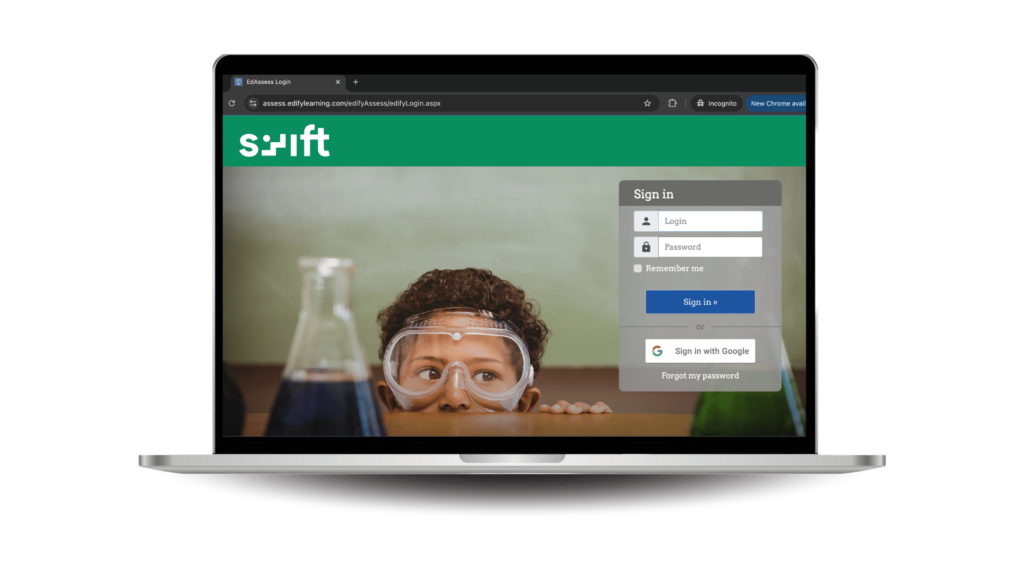
Tools like SWIFT are designed with busy SENCOs in mind, a whole-class screen that can be completed in around 40 minutes and gives you an evidence-based starting point for identifying which students need a closer look.
Behavioural and Social-Emotional Assessments
Some psychometric tools assess social, emotional, and behavioural functioning, including attention, anxiety, and social communication. These are often used alongside cognitive assessments to build a fuller picture of a student’s needs.
What Psychometric Tests Measure
One of the most common questions from educators new to psychometric assessment is: what exactly do these tests measure? The answer depends on the specific tool, but the key cognitive areas assessed in educational psychometric testing include:
- Working memory. The ability to hold and manipulate information in the mind over short periods. Working memory difficulties are strongly associated with learning difficulties, including dyslexia and ADHD.
- Processing speed. How quickly and accurately a student can complete simple cognitive tasks. Slow processing speed can significantly affect performance in timed assessments, even when the underlying ability is strong.
- Phonological processing. The ability to recognise and work with the sound structure of language, a core skill underpinning reading and spelling development.
- Reading fluency. How accurately and efficiently a student reads words and non-words, both in isolation and in connected text.
- Verbal and non-verbal reasoning. The ability to think logically and solve problems, using language (verbal) or patterns and shapes (non-verbal).
- Visual-motor processing. The ability to integrate visual information with motor output, important for tasks like writing and copying.
- Long-term retrieval. The ability to store and retrieve information from long-term memory efficiently.
Understanding which specific areas are being measured, and why, is an important part of interpreting psychometric results meaningfully. A single score rarely tells the whole story; it’s the pattern of scores across multiple areas that gives the most useful picture of a student’s learning profile.
How Psychometric Testing Works in Practice
If you’re relatively new to psychometric assessment, it can seem like a complex and somewhat mysterious process. In practice, it typically follows a clear set of steps.
- Referral or identification. A student is referred for assessment, either because a SENCO or teacher has identified a concern, a parent has raised a difficulty, or a screening tool has flagged the student as potentially needing further investigation.
- Pre-assessment information gathering. Before any formal testing takes place, the assessor collects background information, teacher observations, samples of the student’s work, any previous reports, and details of support already in place.
- The assessment session. The assessor works one-to-one with the student, administering a battery of standardised tests. Sessions typically last between one and two hours and are conducted in a calm, supportive environment. The assessor follows strict standardised procedures to ensure the results are valid.
- Scoring and interpretation. Once testing is complete, the assessor scores the results and interprets them in the context of the student’s background and the referral question. This is where professional judgement is essential, understanding what the scores mean in combination, not just in isolation.
- Reporting and recommendations. The assessor produces a written report summarising the findings, explaining what the results mean in plain language, and making practical recommendations for the student’s support, including, where relevant, recommendations for access arrangements.
- Feedback and next steps. Good practice involves sharing the findings with the student, their parents or carers, and relevant school staff, and agreeing on what happens next.
Try SWIFT
Get instant, JCQ-ready reports in minutes!
Assess literacy, numeracy, and thinking skills with instant colour-coded reports.
Understanding Psychometric Scores
One of the most important things for educators to understand about psychometric testing is how to read the scores. The most common scoring system uses standardised scores, with a mean (average) of 100 and a standard deviation of 15.
Here’s what that means in practice:
- Score of 100: exactly average for the age group.
- Scores of 85–115: within the average range (around 68% of students fall here).
- Scores of 80–84: low average. Slightly below peers.
- Scores of 70–79: below average. May indicate a more noticeable difficulty.
- Scores below 70: well below average. Typically indicates significant difficulty.
- Scores of 116+: above average to high ability.
- Score of 84 or below (JCQ context): may support an application for 25% extra time, where this reflects a relevant difficulty and the student’s normal way of working.
Psychometric reports may also include percentile ranks (which tell you what percentage of the population scored below a given score) and confidence intervals (which account for the fact that any test score is an estimate, not an exact measurement). A good assessor should be able to explain these in plain language in their report.
Worth knowing:
Standardised scores are age-adjusted, which means a 14-year-old’s score of 85 reflects performance relative to other 14-year-olds, not an absolute measure of ability. This is what makes them meaningful for identifying whether a student is performing significantly below what would be expected for their age.
Who Can Administer Psychometric Tests in Schools?
Not all psychometric tests can be administered by all school staff. Tests are classified by the level of training and qualifications required to use them appropriately.
In practice, schools will come across three broad levels:
- Level A tests: more straightforward attainment and screening tools. These can often be used by staff with appropriate training.
- Level B tests: more complex cognitive and processing assessments. These require formal training and a recognised qualification, such as the CCET or a Level 7 ETAAC.
- Specialist assessments: such as full cognitive ability batteries (e.g. WJ V, WISC-V), are typically administered by educational psychologists or specialists with advanced training.
For the purposes of JCQ access arrangements, assessors must meet specific qualification requirements set out in the AARA document. The JCQ recognises qualifications in educational testing, such as those accredited through relevant professional bodies, as the standard required to conduct formal access arrangements assessments in schools.
This means that having a trained, qualified assessor in your school is not just good practice, it’s a regulatory requirement if you want to conduct in-house assessments that will hold up to JCQ inspection.
Psychometric Testing and Access Arrangements
In the UK, psychometric testing sits at the heart of the JCQ access arrangements process. When a school applies for 25% extra time or other exam adjustments for a student, formal psychometric evidence is typically required to support the application.
Specifically, JCQ requires evidence of below-average standardised scores in relevant areas of cognitive processing or fluency — drawn from the defined list of acceptable assessment areas set out in the AARA. This evidence is documented on the relevant JCQ forms (Form 8 or Form 9) and must be held on file for inspection.
The connection between psychometric testing and access arrangements means that assessment quality really matters. Scores that are incorrectly administered, poorly interpreted, or drawn from unsuitable tests may not support a valid application — and could leave a student without the support they need during exams.
Key principle:
Access arrangements are designed to remove barriers for students with genuine needs, not to give an unfair advantage. Rigorous psychometric assessment is what ensures the process is fair, defensible, and student-centred.
Common Questions About Psychometric Testing
Is psychometric testing the same as an IQ test?
Not exactly. IQ tests are one type of psychometric test, they measure general cognitive ability. But psychometric testing in schools is much broader than this, covering everything from phonological processing and reading fluency to working memory and processing speed. An educational psychometric assessment will typically look at a specific profile of abilities, not just a single IQ figure.
Can psychometric tests diagnose dyslexia or ADHD?
Psychometric tests can provide strong evidence of specific learning difficulties, but a formal diagnosis of dyslexia or ADHD is made by a qualified professional using a combination of assessment information, background history, and clinical judgement. Psychometric scores are an important part of that picture, but they are not the whole picture on their own.
How often should students be reassessed?
This depends on the purpose of the assessment and the student’s circumstances. For access arrangements, JCQ has specific guidance on how long approved arrangements remain valid and when reassessment is required.
For general learning support purposes, reassessment is typically considered when there has been a significant change in a student’s presentation, when the original assessment evidence is several years old, or when a student is moving to a new phase of education.
Are psychometric test results confidential?
Yes. Psychometric assessment reports contain sensitive personal data and should be handled in line with GDPR and the school’s data protection policy. Reports should be stored securely and only shared with those who have a legitimate need to access them, with appropriate consent in place.
What if a student finds the assessment stressful?
A skilled assessor will work to put students at ease and will adjust the pace of the session if needed. Assessment conditions should be calm and supportive, and assessors should be alert to signs that a student is fatigued or anxious. It’s also worth preparing students in advance, letting them know what to expect and reassuring them that there are no right or wrong answers in a general sense, can make a real difference.
Key Takeaways
Psychometric testing is one of the most valuable tools available to schools for understanding and supporting students with additional needs. Here’s a summary of the most important points:
- Psychometric tests are standardised, reliable assessments that measure specific cognitive abilities and skills.
- In schools, they are used to identify learning difficulties, evidence the need for support, and inform applications for access arrangements.
- There are different types of psychometric tests, including cognitive, attainment, processing, and screening tools, each designed for a different purpose.
- Scores are standardised against age norms, with 100 as the average. Scores at or below 84 are typically considered below average.
- Not all tests can be administered by all staff; JCQ access arrangements require evidence from a qualified assessor meeting specific regulatory criteria.
- Good psychometric assessment is about more than scores; it’s about understanding the whole student and making recommendations that genuinely improve their educational experience.
PS: This guide is intended as an educational resource for school staff. It does not replace the official JCQ AARA guidance or the professional judgement of a qualified assessor.